Rockwall storm damage roofing
Storm Damage Roof Repair
in Rockwall, Texas
Free hail inspection, documented with dated photos, and a straight answer about whether you actually have a claim. Emergency tarping when the roof is open. We have been working North Texas storms since 1995, and we will still be here next season.
Everything is better with Bacon.
Get Your Free Storm Inspection
No cost, no obligation. The sooner after the storm, the better the documentation.
Free inspections, zero pressure. We will call you back the same business day.
4.9 Stars, 160+ Reviews
Certified GAF Installer
Documented With Dated Photos
Free Inspections
Family-Owned Since 1995
What hail actually does
Hail Does Not Punch Holes. It Shortens The Clock.
Homeowners expect hail damage to look like damage. Most of the time it does not. A hailstone hits the shingle, knocks the protective granules loose, and bruises the mat underneath, which is the fibreglass layer doing the actual work. Nothing leaks that day. But the granules are gone, so that spot now cooks in the sun, and the bruise is a weak point waiting for the next wind.
That is why you cannot judge a hail roof from the driveway, and why a roof can look completely fine for two years after the storm that finished it. Finding it means getting up there and feeling for soft spots in the mat, counting hits in a measured area, and checking the soft metals for corroborating dents.
We have been doing this in Rockwall since 1995, through a lot of North Texas hail seasons. We know which subdivisions took the worst of a given storm, and we know what a real claim looks like versus a roof that is simply old. If there is not enough damage to stand behind, we will tell you that rather than encouraging you to file.


What we look for
What Storm Damage Actually Looks Like Up Close
Hail and wind leave different signatures, and an adjuster is looking for specific ones. This is what we photograph on a storm inspection and why each of them matters.
- Hail bruising. A soft spot you feel rather than see, where the impact has fractured the mat under the surface. This is the damage that matters most and the one homeowners never find on their own.
- Granule loss. Dark spots where the protective surface has been knocked off, and granules collecting where the downspouts drain. Those granules are the shingle’s sunscreen.
- Creased and wind-lifted shingles. Wind folds a shingle back and breaks the seal strip. It often lies back down looking normal, but it is no longer sealed, and the next gust takes it.
- Missing shingles. The obvious one. The real work is the surrounding shingles that lifted with it and resettled, because those are what goes next time.
- Damaged flashing, vents and pipe boots. Hail dents soft metal and cracks aged rubber. These are small parts, and they are exactly where water gets in once they fail.
- Dents in the soft metals. Gutters, downspouts, vent caps, window wraps, and the AC condenser fins. These corroborate a hail event even when the shingles are ambiguous, which is why we photograph them too.
After the storm
What To Do After A Storm
The days right after a storm are when the door-knockers arrive and the decisions get made fast. Here is the order we would recommend, whether or not you call us.
1
Photograph What You Can See
From the ground and from inside. Shingles in the yard, granules at the downspouts, dents in the gutters, any stain on a ceiling. Date-stamped photos, taken now.
2
Do Not Sign Anything At The Door
Not a contract, not an authorisation, not a “just so we can inspect it” form. After a big storm a lot of paper gets waved at Rockwall homeowners. Read it, or do not sign it.
3
Get It Inspected Within A Few Weeks
Not months. The evidence is clearest while it is fresh, and pinning down the correct date of loss matters more than most homeowners realise.
4
We Document It Properly
We walk the roof, feel for bruising, count hits in a measured area, photograph the soft metals, and put it all in one file with the date of loss on it.
5
Then You Decide
If there is a real claim, we can be your contractor of record and meet the adjuster on the roof. If there is not, we will say so and you have lost nothing but an hour.
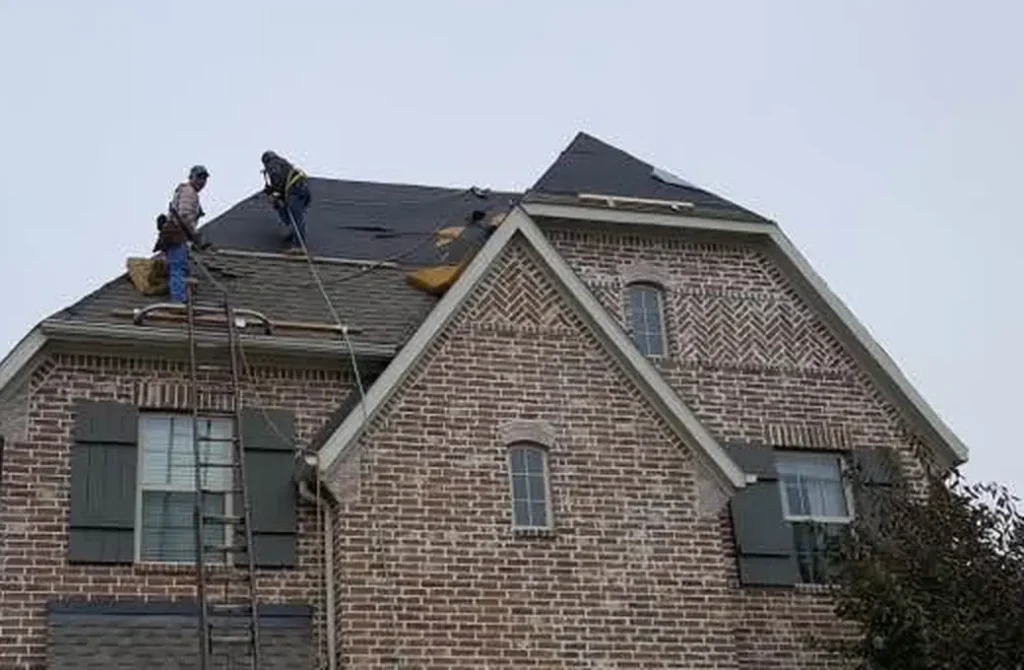
Who knocked on your door
Three Roofers Knocked This Week. Which One Is Still Here In 2030?
After a big hail event, crews come in from out of state, work a season, and move on to the next storm. Some of them do fine work. The problem is what happens when you need them two years later.
A roofer who lives here…
- Has a local address you could drive to, and a phone number that will still work next year.
- Knows the local code. Garland requires a full replacement once enough decking has to come off, and that knowledge is worth real money to you.
- Will tell you when there is not enough damage to stand behind a claim, because they have to live here afterwards.
- Backs the work with a warranty they will still be around to honour.
We have been at this in Rockwall since 1995.
A crew following the storm…
- Turns up days after the hail with an out-of-state plate and a clipboard.
- Wants a signature at the door before anybody has been on the roof.
- Is confident about your claim before seeing your roof, which is a tell.
- Offers a warranty, and then leaves the market before the first winter tests it.
Poor craftsmanship, hoping nobody notices until the check clears.
Plenty of out-of-town crews do honest work, and we are not going to pretend otherwise. But ask any roofer where their office is, how long they have worked this market, and who answers the phone in 2030. The answers are worth more than the pitch.
Roof open after the storm?
That is an emergency. We will tarp it and dry it in first, then deal with the claim once the water has stopped.
The claim
We Navigate The Claim Process With You
This is the part homeowners dread, and it is worth being precise about what we do and do not do. We are roofers. We are not adjusters, we are not attorneys, and we do not advise anybody on their policy. What we do is document the roof properly and talk to your adjuster about the scope of work, which is the conversation we are actually qualified to have.
- A free inspection, documented. We photograph the bruising, the granule loss, the wind lift, the flashing and the soft metals, and we pin down the date of loss while it is still fresh. That file is the foundation of everything after it.
- Make us your contractor of record. That makes us the point of contact with your adjuster rather than leaving you to sort it out alone, and it means somebody who does this for a living is on the roof when they are.
- We meet your adjuster on the roof. Not in the driveway. We walk it with them, show them what we found, and make sure the damage we documented is the damage being looked at.
- We talk scope of work, never policy. We bring up code requirements and the manufacturer’s instructions to make the case for the correct repair, because how a roof has to be built is a factual question, not an opinion.
- We file a supplement when the scope leaves something out. Adjusters work fast and across a lot of roofs after a storm. If something was missed, a supplement is the normal mechanism for adding it.
- Straight expectations, start to finish. If there is not enough damage to stand behind a claim, we will tell you that before you file rather than after.
What We Bring To The Adjuster Meeting
Documentation, not opinions.
Dated photosDate of lossCode requirementsManufacturer instructionsWritten scopeSupplement, if needed
Where claims go wrong
Three Reasons A Claim Comes Back Short
Adjusters are working a lot of roofs in a short window after a storm, and things get missed. These are the three we see most often, and all three are fixable if somebody catches them.
The Wrong Date Of Loss
North Texas gets several storms a season. If the claim is filed against the wrong one, the damage may not line up with the weather record for that date. Getting the correct storm on the paperwork can change a claim substantially.
A Scope That Misses Code
What a roof is allowed to be is set by code and by the manufacturer’s instructions, not by what is cheapest to put back. If the scope does not account for what the code actually requires, that is what a supplement is for.
Damage Nobody Documented
Bruising you can only find by feel, dents in the soft metals, a slope nobody walked. If it was not photographed, it effectively did not happen. This is the whole reason we document before anything else.
What You Get From Us
A Documented Roof
Dated photographs of every slope and every soft metal, with the date of loss recorded, in one file.
Somebody On The Roof With Your Adjuster
As your contractor of record, talking scope of work. Not in the driveway waiting to hear the verdict.
An Honest Answer First
If there is not enough damage to stand behind, we say so before you file, not after.
Your local roofing team
Here Before The Storm, Here After It
Storm season brings a lot of roofers to Rockwall who were not here in March and will not be here in December. We have worked this market since 1995 and the office is across the bridge in Rowlett. Thirty years in one place is a credential a new competitor cannot copy, and it is the whole reason we can afford to tell a homeowner their roof is fine.
We serve homeowners within about an hour of Rockwall, including Rowlett, Heath, Wylie, McLendon-Chisholm, Royse City, Sunnyvale, Garland, Mesquite, Sachse, Forney, and Anna. If you are close and not sure whether we cover your address, call and ask. The answer is usually yes.
Everything is better with Bacon.
Reviews
What Bacon Roofing Customers Say


Common questions
Storm Damage FAQs
How do I know if I have hail damage? My roof looks fine.
It usually does. Hail bruises the mat under the shingle surface and knocks off the granules, and neither of those is visible from the ground. The tells you can see are granules collecting where the downspouts drain and dents in the soft metals, gutters, vent caps, window wraps, and the AC condenser fins. Finding the actual bruising means somebody walking the roof and feeling for soft spots.
How long after a storm should I get it inspected?
Within a few weeks rather than a few months. The evidence is clearest while it is fresh, and pinning down the correct date of loss is far easier close to the event. There are also time limits on filing, which vary, so do not sit on it.
Do you help with insurance claims?
We help you navigate the process. Make us your contractor of record and we become the point of contact with your adjuster, meet them on the roof, and document the damage with dated photos. We discuss the scope of work and what code and the manufacturer’s instructions require, and we file a supplement when the scope leaves something out. We are roofers, not adjusters or attorneys, so we do not advise on your policy.
Should I file a claim before or after the inspection?
Get it inspected first. If there is not enough damage to stand behind, you will know before you have filed anything, and we would rather tell you that than encourage a claim that is not there. If there is real damage, you will file with documentation already in hand.
Somebody knocked on my door after the storm. Should I sign?
Not at the door, and not before anybody has been on the roof. After a big hail event a lot of paper gets waved at Rockwall homeowners, including authorisation forms dressed up as inspection requests. Read anything before you sign it, or do not sign it. A roofer who needs a signature before looking at your roof is telling you something.
Will I need a full replacement or just a repair?
It depends on how the damage is distributed. Damage concentrated in one area on a roof with life left in it is usually a repair. Bruising spread across several slopes is a different conversation. The inspection settles it, and we will show you the photos either way.
What if the adjuster misses something?
That is what a supplement is for, and it is a completely normal part of the process. Adjusters work a lot of roofs in a short window after a storm. If the scope leaves out something the code or the manufacturer’s instructions require, we document it and submit it.
What areas do you serve?
Homeowners within about an hour of Rockwall, including Rowlett, Heath, Wylie, McLendon-Chisholm, Royse City, Sunnyvale, Garland, Mesquite, Sachse, Forney, and Anna.
Contact Bacon Roofing
Find Out If You Actually Have A Claim
Tell us when the storm came through and what you have noticed since. We will come out, walk the roof, document it properly, and tell you honestly whether there is a claim worth filing. No charge, and no pressure either way. If the roof is open right now, call instead.
Phone
Office
8126 Lakeview Pkwy, Suite 13
Rowlett, TX 75088
Credentials
Certified GAF installer. Family-owned and working North Texas storms since 1995.
Request Your Storm Inspection
Fill this out and we will call you back the same business day.