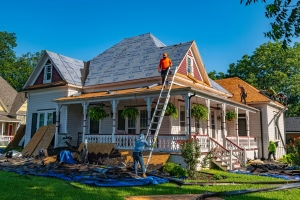
Short answer: if a covered event like a hailstorm or high wind tore up your roof, most homeowners policies will pay to fix or replace it. If the roof simply wore out, or nobody ever maintained it, that’s a different story. We’re Bacon Roofing, and we’ve been reading North Texas roofs for 30 years out of our office at 8126 Lakeview Parkway in Rowlett. Let’s walk through what’s covered, what isn’t, and how a contractor of record helps you navigate the insurance process without stepping on any legal landmines.
One thing up front, so we’re honest with you: we’re roofers, not insurance advisors and not public adjusters. We won’t discuss the fine print of your policy. What we do is meet your adjuster on the roof, document the damage, and make the case for the correct repair using code and manufacturer’s instructions. That’s the lane we stay in, and it works.
When homeowners insurance covers roof damage in Rowlett
Insurance is built to pay for sudden, accidental damage from a covered peril. In North Texas, that almost always means hail and wind. A spring storm rolls through, bruises your shingles, cracks the mats, knocks granules loose, and now your roof isn’t shedding water the way it should. That’s the kind of loss a policy is designed for.
Common covered perils include:
- Hail damage (the big one here, and often the hardest for a homeowner to see from the ground)
- Wind damage that lifts, creases, or blows off shingles
- Fallen trees or branches, like the ice-storm limb we’ll get to below
- Fire and certain sudden accidental events
The key word is sudden. There has to be a date of loss, the day the storm actually hit. That date matters more than most people realize, and getting it right can swing a claim by thousands of dollars.
When roof damage is not covered
Here’s where we tell people the truth, even when it isn’t what they want to hear. Insurance does not pay to replace a roof that’s just old and tired.
Wear, tear, and age
A roof that’s reached the end of its life from years of Texas sun is a maintenance issue, not a claim. Curling, brittle shingles with no storm event behind them usually get denied. That’s normal wear, and no adjuster is going to buy a roof because it got old.
Neglect and lack of maintenance
Then there’s the slow leak that had nothing to do with a storm. Most of those we chase down come through penetrations, the holes where pipes and vents come up through the roof. When those details are done wrong, water finds its way in for years. That’s a repair, not a covered peril, and if it’s been leaking a long time an adjuster may call it neglect.
We had an 8-year-old new-construction home suddenly show a leak. We traced it to the flashing on the water-heater exhaust vent. The original installer cut the shingle about 2 inches short and left a nail hiding a quarter inch behind it. Water likes to loop under a shingle edge instead of dropping off clean, so for eight years it looped under, hit that nail, and wicked down through the decking and attic insulation until it finally showed up on the sheetrock. That’s not storm damage. That’s a craftsmanship defect, and it takes someone who knows how these assemblies are supposed to be built to find it.
Why North Texas soil quietly sets up roof failures
Here’s the part most homeowners never hear. All fasteners move because all houses in North Texas move because of our soil. The expansive clay under Rowlett, Rockwall, and the rest of the area swells when it’s wet and shrinks when it’s dry, and your whole house rides that movement season after season. A nail that was flush at install slowly backs out a hair. Now it’s a raised head sitting under a shingle, exactly the ridge water loves to travel down.
That’s how a roof that looks fine from the driveway develops a slow, hidden leak with no dramatic storm to point to. It’s also why good flashing work matters so much. Flashing comes off the roof deck and runs up the wall. Counter flashing comes out of the wall and covers it, giving you a waterfall effect where water sheds down layered metal the way it should. When somebody skips the counter flashing and just caulks the top, that isn’t part of a roofing system. That’s just hope.
ACV vs. RCV: how your claim gets calculated
Two policies can both “cover” your roof and pay very differently.
- Actual Cash Value (ACV): pays the depreciated value, meaning the age and wear of the old roof gets subtracted. Older roof, bigger deduction, smaller check.
- Replacement Cost Value (RCV): pays to replace the roof with new materials of like kind and quality, usually releasing the held-back depreciation once the work is completed and documented.
We can’t tell you which one your policy is, that’s policy talk and outside our lane. But we can tell you the scope of work needs to be documented correctly either way, because the more accurately the damage and the correct repair are captured, the better your claim reflects reality.
Will insurance cover a 30-year-old roof?
Sometimes, but expect a harder road and a smaller payout. A roof that old is often written on an actual cash value basis, so depreciation takes a real bite, and adjusters scrutinize age-related wear closely. If there’s genuine fresh hail or wind damage with a clear date of loss, it can still be a valid claim. If the roof is just worn out, that’s replacement out of pocket. We’ll give you a straight answer after we look, not a sales pitch.
How to file a roof damage claim, step by step
- Get a free inspection first. We’ll come out, get on the roof, and tell you honestly whether there’s enough real damage to stand behind a claim. If there isn’t, we’ll say so. Free inspections, zero pressure.
- Pin down the date of loss. Which storm caused it matters. Get this wrong and you can leave money on the table or open a claim on the wrong event.
- Contact your insurer to open the claim and schedule the adjuster.
- Make us your contractor of record. That makes us your point of contact with the adjuster so we meet them on the roof and get everything they can see covered on the front end.
- File a supplement if needed. When we tear off and find something that couldn’t be seen with the roof on, or an item that got missed, we document why it’s needed and file for it.
- Do the work to spec with code and manufacturer’s instructions, then finish the paperwork.
What a contractor of record actually does on the job
Making us your contractor of record isn’t a formality. It means we meet the adjuster on site and walk the roof with them, so there’s minimal back-and-forth later. We push to get items covered that don’t always show up in a standard claim packet, like new skylight flashing or new fireplace flashing, backed with documentation of why the correct repair requires them.
A real example. A homeowner called his insurer himself back in March and was told there was no damage. He later called us just to swap out a skylight. We spotted hail damage and asked when the adjuster had come out. End of March. But there was a hailstorm on April 27th, a different date of loss. We guided him to close the stale claim and open a new one dated correctly. When the adjuster tried to subtract previously paid items from the new claim, we flagged the double jeopardy, and the adjuster agreed. Result so far: about $12,000 to the homeowner’s good, everything to manufacturer spec, at no extra cost to him. The method is calm and documented every time. We show the adjuster the manufacturer’s instructions, explain why the repair should be done a certain way, send a PDF, and stay nice about it.
And we’re honest about limits. We’re not going to get you a bazillion dollars. But if it’s covered, you can get a lot done on your house.
Local code knowledge that changes the outcome
We always pull a permit and follow code, and code is not the same in every city out here. Garland has an ordinance that if you replace more than 25% of the decking, all of it has to be replaced. After an ice storm dropped a large branch and damaged just over that 25% on one home’s decking, that ordinance meant the homeowner got all-new, code-compliant decking and effectively a new roof instead of scattered spot repairs. That was simply us knowing what the code is and how to apply it correctly. That’s the kind of thing a contractor who works these towns every week catches and an out-of-area storm chaser doesn’t.
Choosing a roofing contractor you can trust
After a storm, the driveway flyers show up fast. A few things to look for: a real local address (ours is right here in Rowlett, literally across the bridge from Rockwall), manufacturer certification, and a warranty you can actually hold. We’re a certified GAF installer, and we back our roofs with a 10-year GAF Systems Plus warranty that’s manufacturer-backed and transferable once with no fee, plus our own 10-year workmanship warranty. Poor installers hope nobody notices what they’ve done until the check clears and they’re gone. Our written estimate holds unless hidden damage is uncovered, and you’ll know exactly why every line is there.
Frequently asked questions
Will my homeowners insurance cover a new roof?
Yes, if the damage came from a covered peril like hail, wind, or a fallen tree with a clear date of loss. A roof that simply aged out or was never maintained usually won’t be covered. The fastest way to know is a free inspection so we can tell you honestly whether there’s a real claim to stand behind.
What should I not say to a roof insurance adjuster?
Don’t guess at or exaggerate the age, cause, or timing of the damage, and don’t downplay a real storm event. Stick to the facts and let the evidence on the roof speak. We’d rather let the insurance company be the neutral umpire than push a biased story, which is exactly why having us meet the adjuster on site and document the actual damage helps everyone stay accurate.
Is it worth claiming roof damage on insurance?
It’s worth it when there’s genuine covered damage, and it’s not worth it when there isn’t. If the damage is real, the correct repair often costs far more than your deductible and the claim makes clear sense. If we get up there and the damage is minor or age-related, we’ll tell you straight rather than talk you into a claim that won’t hold.
Will insurance cover a 30-year-old roof?
It can if there’s fresh, verifiable storm damage, but older roofs are often paid on an actual cash value basis, so depreciation reduces the check and adjusters look hard at age-related wear. If the roof is just worn out with no storm behind it, that’s typically an out-of-pocket replacement.
Ready to find out where you stand?
If your Rowlett, Rockwall, Garland, or greater DFW roof took a hit this storm season, get a straight answer before you call anyone else. We’ll inspect it free, tell you honestly whether there’s a claim worth filing, and if there is, serve as your contractor of record and meet your adjuster on the roof. Call Bacon Roofing at 972-772-1999 to schedule your free, zero-pressure inspection.